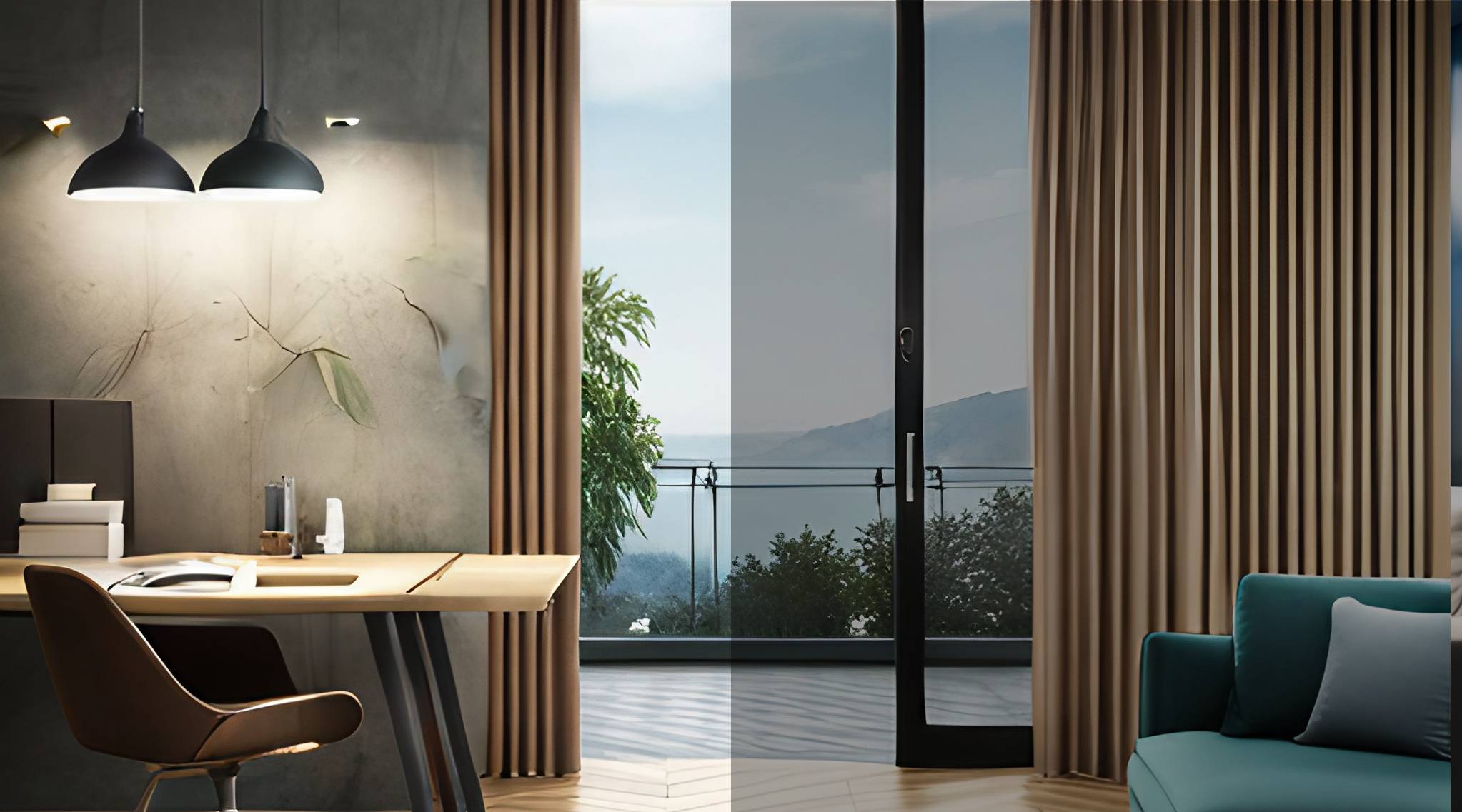
Window films help Toronto and GTA homeowners fix some of the most common glass problems without changing the whole window. People search for window films when a room gets too bright, a front door feels too exposed, or plain glass just looks a bit cold. If you want more privacy, less glare, softer light, or a better-looking finish, window films are often one of the first things worth checking.
That matters a lot in this part of Ontario. Condos in CityPlace and Mimico can get blasted with afternoon sun. Older homes in East York and Riverdale often have front windows close to the sidewalk. Newer houses in Vaughan and Markham may have large glass panels at the entry or in the back family room. In all of those cases, the glass may be doing its job, but not doing enough. The room can feel hot, sharp, exposed, or just awkward to use.
Residential window films give homeowners a practical fix. You keep the glass you already have, but you change how it works. Some films help with glare. Some help with privacy. Some add a frosted or patterned look. Some are used for style on pantry doors, home offices, and side entries. Others are chosen because the homeowner wants a cleaner look without paying for full replacement.
A lot of people still think window films only mean dark tint. That is not really how the market works now. Today, window films include solar films, privacy films, decorative films, vinyl films, logo films, and clear options that keep the glass looking simple. The best one depends on the room, the sun, the view, and what is bugging you every day.
What Window Films Are and Why More GTA Homeowners Use Them
Window films are thin layers applied to glass. Once installed, they change the way light passes through the glass or the way the glass looks from inside and outside. The change can be small or pretty obvious. A clear film may barely show. A frosted film changes the whole feel of the window. A solar film may lower glare and make a sunny room easier to use. A decorative film can turn a plain glass panel into something that looks more finished.
This is one reason window films are so popular in Toronto and the GTA. Homes here are not all the same. A small condo office in Liberty Village needs something different from a front entry in Richmond Hill. A bathroom in North York needs something different from a side door on a basement suite in Scarborough. The film has to match the room, not just the glass.
Most homeowners end up looking at a few basic categories:
- Solar window films for strong sun and glare
- Privacy window films for bathrooms, front doors, and lower-level rooms
- Decorative window films for frosted, etched, or patterned looks
- Vinyl window films for shapes, coverage, and graphic details
- Logo films for home offices, studios, and client-facing spaces
Homeowners often start by saying they want tint. Then, once they talk it through, they realize the bigger issue is not “tint” at all. It might be that the front door has clear sidelights. It might be that the family room gets blasted after lunch. It might be that an office door looks too bare. Window films are useful because they give more than one path to fix the problem.
The GTA also has a lot of glass-heavy housing. Condos keep going up, and many newer homes use bigger windows than older ones. Statistics Canada shows the Toronto census metropolitan area is one of the largest population centres in Canada, which means more homes, more condos, and more day-to-day window issues showing up in searches and service calls. You can see the population and housing data on Statistics Canada.
Here is a real type of case that comes up a lot. A condo owner near Harbourfront loves the floor-to-ceiling glass and lake view, but by 3 p.m. the living room becomes the least comfortable room in the unit. The glare hits the TV, the sofa feels warm, and the blinds stay closed half the day. In that case, a solar-style window film may help make the room easier to use without giving up all the daylight. That is why many homeowners see window films as a practical step, not just a style add-on.
Another case is a front entry in Vaughan with decorative glass that still lets people see more than the owner wants. A frosted or patterned film can change that fast. The hallway still gets light. The glass still looks neat. But the sightline from outside drops off a lot. Thats a small upgrade, but it changes how the entrance feels every day.
How Window Films Help with Sun, Privacy, and Better-Looking Glass
The biggest reason people buy window films is simple. They are tired of a room not feeling right. Sometimes it is glare. Sometimes it is privacy. Sometimes it is both at once.
Sun is a big issue in Toronto and the GTA. A room can look perfect at 10 a.m. and feel rough by mid-afternoon. West-facing condos in Etobicoke, south-facing family rooms in Mississauga, and upper-floor home offices in downtown Toronto all deal with this. You sit down to work or relax and the light feels too hard. That is where solar window films can help. They do not fix every comfort problem in a house, but they can reduce some of the harshness coming through the glass.
The City of Toronto tracks the warm season closely because hot weather affects homes and daily life across the city. The City’s heat relief guidance explains how long the hot season can run and why indoor comfort matters during warmer months. Homeowners can read more on the City of Toronto Heat Relief Strategy. That is part of why window films keep coming up in local searches. People are trying to make rooms feel usable again when the sun is hitting hard.
Privacy is the next big reason. Many GTA homes sit close to sidewalks, driveways, or neighbours. A main-floor bathroom, front sidelight, or basement entrance can feel too open very fast. Curtains and blinds help, but they also block the light. Frosted and decorative window films give homeowners another option. They keep the room brighter while cutting the direct view.
That is why decorative films get used in so many spots:
- bathroom windows
- front door sidelights
- basement suite entries
- laundry room glass
- pantry doors
- interior office partitions
Style matters too, even if people do not say it at first. A clear pane of glass can feel cold or unfinished. A decorative film softens the look. A vinyl film can add shape or partial coverage. A logo film can make a home office or studio entrance look more put together. These are small changes, but they can make a home feel more settled and better planned.
One good example is a family in Leslieville that used part of the main floor as a tutoring space. The room faced the street, and the glass panel on the door felt too open when students arrived. Full blinds looked heavy and cheap. They went with a soft frosted band and a small name mark on the glass. The room stayed bright, but the space felt calmer and more proffesional. It also gave the family a bit more privacy without making the front area dark.
Another example is a detached home in Brampton with a side entry for a basement suite. The owner wanted privacy for tenants and a cleaner look from the yard. A simple privacy film on the lower section of the door solved both problems. It was not flashy, but it worked. That is the thing with window films. A lot of the value is in making small daily annoyances go away.
Some people ask if films make rooms dark. Some do change the light level a bit. Many do not do much at all. Frosted films often keep the room bright while adding privacy. That is why samples matter. You want to see the finish on glass, not just in a tiny swatch book or online photo.
How Residential Window Film Installation Works and What to Ask First
The basic install process is simple to describe. The glass is cleaned well. The film is measured and cut. It is placed on the glass, smoothed flat, and trimmed at the edges. What makes the result good or bad is the prep, the film choice, and the finish quality.
A good installer starts by asking what problem you want solved. That question matters more than people think. If you just say “I want tint,” you may end up looking at the wrong products. If you say “my dining room is too bright after lunch,” or “my front door feels too open,” the right option becomes easier to find.
That is because one house can need several kinds of window films at once. For example:
- The living room may need glare control
- The bathroom may need privacy film
- The pantry door may need decorative film
- The home office may need a logo or frosted band
In Toronto, local job conditions matter too. Condo installs can involve elevator bookings and loading rules. Older homes in areas like the Annex or Riverdale may have trim details that need very careful cutting. Homes near the lake may get stronger light at certain times of day. Installers who work across Toronto, Mississauga, Vaughan, Markham, and Richmond Hill usually know these little details already, and that helps the job go smoother.
This is also why cheap DIY film often goes wrong. On a small pane, maybe it works out okay. On a large living room window or a front entry with detailed trim, mistakes show fast. Dust gets trapped. Corners lift. Cut lines look uneven. A few weeks later the film looks tired and the owner has to redo it. Thats not rare at all.
Before booking, ask clear questions:
- Which film fits this room best?
- Will it change the look of the glass a lot?
- How does it look in the daytime and at night?
- Is it right for my type of window?
- What does the warranty cover?
- Can I see real samples first?
Nighttime appearance matters a lot. Some homeowners only think about the daytime view, then get surprized later when indoor lights change how the glass behaves. A straight answer before the job starts saves problems later.
If your goal is to fix a room, not replace the whole window system, window films are often a smart place to start. They are flexible, useful, and much less disruptive than new glass. In Toronto and the GTA, where homes range from compact condos to larger suburban houses, that kind of upgrade makes sense because it fixes a real problem without turning into a big reno.
Quick View FAQs
What are window films for homes?
Window films are thin layers added to glass to reduce glare, improve privacy, soften sunlight, or change the look of the window. Homeowners use them on doors, windows, and interior glass panels.
Are window films worth it in Toronto and the GTA?
Yes, many homeowners find window films worth it because they help with bright sun, privacy, and daily comfort without replacing the glass. They are often used in condos, bathrooms, front entries, and home offices.
Do window films make a room darker?
Some window films darken the glass a little, but many do not. Frosted and decorative films often keep the room bright while still adding privacy.
Where can decorative or logo film be used in a home?
They work well on front door glass, pantry doors, office partitions, side entrances, and studio spaces. They add style, privacy, or simple branding to plain glass.
What should I ask before booking window film installation?
Ask about film type, glass compatibility, warranty, cure time, and how the film will look in day and night light. Ask to see real samples before making a choice.
Leave a Reply