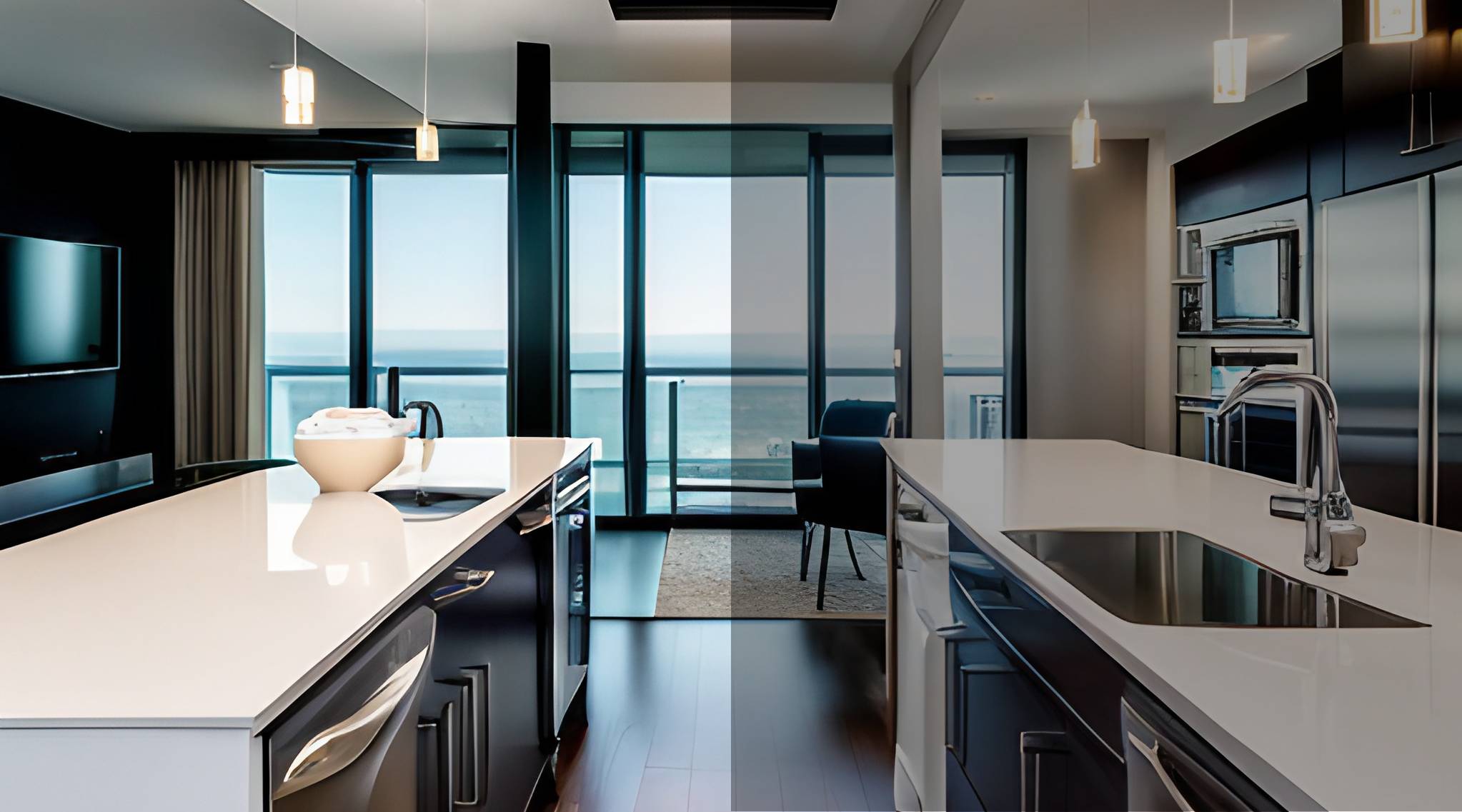
Window films are searched every day by Toronto homeowners, condo owners, shop managers, and office teams who want less glare, more privacy, lower summer heat, and better-looking glass. They also want a straight answer. Are window films actually useful, or are they just another add-on that sounds good in a sales pitch? The truth is pretty simple. Window films can solve real problems, but they also have limits, and those limits matter a lot in Toronto and the GTA where glass gets hit hard by afternoon sun, winter cold, and busy street-level visibility.
That is why this topic keeps coming up in places like CityPlace, Liberty Village, North York, Vaughan, Mississauga, Markham, and Scarborough. One condo owner wants a cooler living room. One clinic wants privacy on interior glass. One retail store wants logo film on the front without making the shop feel dark. Another office wants less glare on screens near west-facing windows. Same product family, very diffent goals. That is where myths start. People hear one promise, assume all window films do the same thing, and then get dissapointed when the result does not match the problem they were trying to fix.
A better way to look at window films is this: ask what the film is meant to do, what trade-offs come with it, and how the room behaves in July and January. The U.S. Department of Energy explains that window films can help block solar heat gain, glare, and UV exposure, while Natural Resources Canada notes that windows are a major part of how homes gain and lose heat. Those two points alone explain why window films matter in Canada, but also why they are only one piece of the puzzle. Energy.gov and Natural Resources Canada both treat windows as part of a bigger comfort and efficiency system, not a magic fix. :contentReference[oaicite:0]{index=0}
Why people get confused about window films
The first reason is the word “tint.” A lot of people still think window films are all dark, all reflective, or all made for cars. That’s old thinking. Some window films are made for heat and glare. Some are made for privacy. Some are decorative. Some are used for logos and branding. Some are thicker safety or security films. They all sit on glass, yes, but they are not all solving the same problem.
The second reason is that people often shop by the promise, not the product. “This will make the room cooler.” “This will stop fading.” “This will give you privacy.” Those claims can be partly true. But partly true is where trouble starts. A film that helps with glare may still change visible light. A privacy film that works well in the daytime may not behave the same way at night. A branded vinyl or logo film may look great from the sidewalk, but it is not the same thing as solar control film.
Toronto and the GTA make this even more obvious. A west-facing condo in Fort York does not behave like a detached home in East York. A dental office in Markham does not have the same glass needs as a storefront in Mississauga. A film that works really well in one space can feel like the wrong call in another. That’s why good planning matters more than people think.
Myth 1: Darker window films always perform better
This is one of the oldest myths around window films, and it still sticks. Darker does not always mean better. Some lighter films still do a strong job with glare and solar heat. Some nearly clear films are picked because the owner wants comfort but still wants the room to feel open and bright. That matters in small condos where daylight helps the space feel bigger and less boxed in.
Say a condo owner near Harbourfront has a living room that gets blasted in late afternoon. The TV is hard to watch. The couch gets hot. The owner assumes the answer must be a very dark film. Maybe. But maybe not. A lighter solar film could take the edge off the glare and heat without changing the look of the whole room too much. That’s often the better fit for people who hate the hot sun but still love the daylight.
The real drawback here is that people choose by shade instead of by job. That usually leads to one of two problems. Either the room gets darker than expected, or the film is too mild for the problem and the owner still feels annoyed every sunny afternoon. Neither outcome is fun, and both are pretty common.
Myth 2: Window films fix every comfort and energy problem
Window films can help a lot, but they do not fix every issue in a home or business. If a room has poor insulation, weak airflow, leaky seals, or an HVAC system that is already struggling, film will only do part of the work. That is not a knock on the product. It is just the honest limit of what a thin layer on glass can do.
This is where simple technical terms help. Two of the most useful ones are solar heat gain coefficient and visible transmittance. Lower solar heat gain means less sun heat getting through. Higher visible transmittance means more daylight coming through. Those ratings are part of how window performance gets judged, which is why people should ask about numbers, not just product names. The DOE explains that lower SHGC means better heat blocking, while VT tells you more about how much visible light gets through. :contentReference[oaicite:1]{index=1}
A small office near North York Centre is a good example. Staff complain every July because the front desk bakes in the afternoon. Window films can help cut glare and some of that heat load. But if the cooling system is undersized and the glass seals are old, the room may still not feel perfect. Film helps. It just doesnt do every job by itself.
That answer may sound less exciting than the sales version, but it’s more useful. A good installer should be willing to say, “This will help, but it will not fix every building issue.” That kind of answer saves people money and frustration later.
Myth 3: Window films always make a space too dark
This one stops a lot of people from even asking for a quote. They imagine a gloomy room, a cave-like office, or a storefront that looks closed even when it’s open. Sometimes that fear is based on old film products. Sometimes it comes from seeing one very dark install and assuming all window films look like that.
But many window films are not trying to make the room dark. Some are trying to soften glare. Some are trying to add daytime privacy. Some are decorative and let plenty of light through while still changing visibility. Frosted and decorative styles are a good example. They are often used in clinics, salons, meeting rooms, front doors, and office partitions because they can add privacy without shutting down the light.
A small clinic in Markham gives a good case study here. The owner wanted more privacy on interior treatment-room glass, but the team did not want blinds because they collect dust and make the space feel closed off. A decorative privacy film solved the visual problem and kept the area bright. The trade-off? The owner had to spend time choosing a finish that looked clean and modern, not too trendy or too cheap. That part matters more than most people expect.
The drawback is not that films always darken a room. The drawback is that people often guess the result from a tiny sample card or a phone screen. Full-window coverage feels different. That is why asking about room brightness, daytime feel, and nighttime feel is smart, even if it sounds basic.
Real drawback 1: Not every window should get every film
This is one of the biggest real-world issues with window films. Glass type matters. Window age matters. Sun exposure matters. Double-pane windows, older sealed units, and some low-e glass setups may need more care when choosing a film. That does not mean film is bad. It means matching the film to the glass matters a lot.
Toronto homes and commercial spaces are a mixed bag. A detached house in the Beaches may have aging windows with seal wear. A newer condo in Vaughan may have large sealed glass units with strong west exposure. A retail unit in Scarborough may have front glass that looks simple but behaves very diffently through the day because of street heat and direct sun. Same film on all three? Maybe not. Same result? For sure not.
This is why experienced installers ask a bunch of questions before recommending a film. What direction does the glass face? Is it double pane? Is there existing low-e coating? Is the room used mainly in the day or at night? That question stage can feel slow, but skipping it is how people end up with bad matches.
Real drawback 2: Privacy can change when the sun goes down
This one catches a lot of people off guard. Daytime privacy and nighttime privacy are not always the same thing. Some privacy films work best when it is brighter outside than inside. That can be great during the day. Then evening comes, the inside lights turn on, and the effect changes. Suddenly the glass behaves in a way the buyer did not expect.
This happens a lot with storefronts and ground-floor units in Toronto. A small shop on Queen Street might love the daytime privacy effect on the back office glass. At night, with interior lights on, that same film may not feel nearly as private. The same goes for front entry glass on some houses and condos. People think the label “privacy film” tells the whole story. It doesn’t.
The lesson is pretty simple. Ask how the film behaves in daytime and at night. If the answer is vague, keep asking. That one question saves people from one of the most common “no one told me this” moments in the whole window film category.
Real drawback 3: Cure time, cleaning, and expectations can trip people up
Another honest drawback is that window films do not always look fully settled the same day they are installed. Depending on the product and the weather, there can be a curing period. In colder Toronto weather, that can take longer. A bit of haze or moisture pattern during cure can be normal, even though it makes customers nervious if no one warned them first.
One small retail case in Scarborough shows how this goes. The owner had decorative and logo film added before a weekend event. The install itself was fine, but a slight moisture haze showed up right after, and the owner thought the whole job was wrecked. A few weeks later it cleared and looked good. The problem was not the film. The problem was bad expectation-setting before the install.
Cleaning is another one. Window films are not hard to maintain, but they are not bare glass either. Aggressive pads, blades, and harsh chemicals can wear some finishes down faster. That matters even more for decorative work and logo applications where appearance is the main point of the product.
How to choose window films more carefully in Toronto and the GTA
You don’t need a huge checklist. A few direct questions do most of the work:
- What problem am I trying to fix first: heat, glare, privacy, branding, or safety?
- What kind of glass do I have?
- How much daylight do I still want?
- Do I need privacy in the daytime, nighttime, or both?
- Will the glass be cleaned often, and by who?
- Am I trying to make the glass perform better, look better, or both?
That short list works for homeowners, condo owners, property managers, and local business owners. It also helps you compare installers in a smarter way. If someone skips questions about the glass, promises one film will solve everything, or talks only about darkness instead of performance, that’s a warning sign.
Final thoughts on window films
Window films can be a very smart upgrade for Toronto and GTA properties. They can cut glare, help manage solar heat, add privacy, support branding, and improve how glass works in real day-to-day use. But they are not a cure-all. They have trade-offs. They need the right glass match. They can change room brightness. They can behave diffently in day and night privacy situations. And they work best when the buyer starts with the real problem, not a myth.
That is the honest version. No hype, no scare talk, just a better way to think about window films before spending the money. When the film fits the job, the result can be very good. When myths do the buying, people often end up blaming the product for a mistake that started much earlier.
Frequently Asked Questions About Window Films
Do window films really help with heat and glare?
Yes. Many window films help cut glare and reduce solar heat gain, but they do not replace bigger fixes like insulation upgrades or HVAC work.
Do window films always make rooms darker?
No. Some do, some barely change the light, and some are chosen mainly for privacy or style while still letting in good daylight.
Are window films a good fit for Toronto condos?
They often are, especially in west-facing units with glare and summer heat. The best result depends on the glass type and the film selected.
Can one window film solve privacy, heat, and branding all at once?
Sometimes a film can help with more than one goal, but not every product does every job well. A better match usually gives a better result.
::contentReference[oaicite:2]{index=2}
Leave a Reply