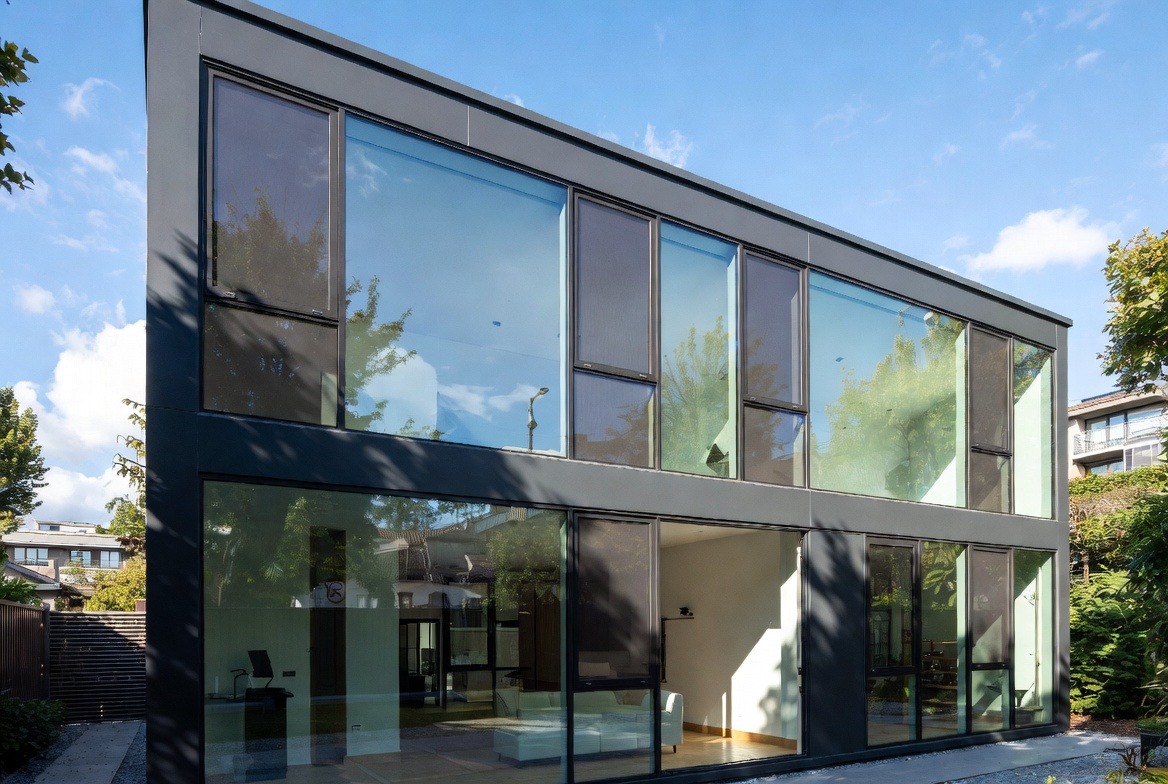
If you are shopping for window films in Toronto or the GTA, you are likely trying to solve one clear problem. Maybe your office gets blasted by afternoon sun. Maybe your clinic feels too exposed from the sidewalk. Maybe your condo common area needs more privacy, but you do not want the glass to look dark or heavy. Window films can help with privacy, glare, style, branding, and comfort. But before you choose a product, you need to think about one thing many people miss at the start: reflective glare compliance.
Reflective glare compliance sounds technical, but the basic idea is simple. A film should help the people inside the space without creating a new problem outside the glass. Some reflective window films can cut glare inside a room, yet also bounce bright light onto a walkway, a road, a patio, or the building across from you. In Toronto, that matters a lot. This city has glass towers, close streets, retail strips, condos, clinics, and office fronts packed near each other. One shiny window can affect more than one unit, and that is where complaints start.
That does not mean reflective window films are always a bad choice. Some jobs need stronger solar control. Some west-facing rooms are so bright that staff keep shutting blinds all afternoon. But the right film depends on the glass, the direction of the sun, the street, the building rules, and what the space is used for. In many Toronto and GTA spaces, a lower-reflectance film or a decorative privacy film ends up working better. This guide explains what reflective glare compliance means, why window films need extra review in this region, and how to choose a film that solves the real problem without causing a new one later.
What reflective glare compliance means for window films
Reflective glare compliance means picking window films that improve the room while keeping the outside effect under control. The room problem may be strong sunlight, hot spots, screen glare, or too much visibility from outside. The outside problem may be bright reflection, a mirror-like look, bird-safety concerns, or a frontage that now feels too harsh for the building. Good window films should balance both sides.
A lot of people use the words tint, film, privacy film, solar film, and decorative film like they all mean the same thing. They do not. Reflective window films are often used for heat control, daytime privacy, and a shinier outside look. Decorative window films are usually used for privacy, branding, style, and breaking up clear glass. Frosted films, dusted films, patterned films, and gradient films can soften views and still let in light. They usually do that without the same mirror effect on the outside. That diff matters more than people think.
Local site conditions change everything. A reflective film may look fine on a sample card in a showroom. The same film may look way too sharp on a west-facing boardroom window in Vaughan. On a ground-floor storefront in downtown Toronto, that reflected light can push back onto the sidewalk at the exact hour foot traffic is busy. In a condo or mixed-use building, that can lead to complaints from neighbours or management. So glare compliance is not only about whether a film can be installed. It is about whether the film fits the site.
The City of Toronto has guidance on bird-friendly glass and reflective surfaces, which is useful when you are reviewing glass near grade or near landscaping. The city points builders and owners to lower-reflectance treatments and visible glass patterns in many situations. You can read more in the City of Toronto’s bird-friendly glass best practices. For property owners, the takeaway is pretty clear: do not judge window films only by shade or colour. Ask how the film behaves on the actual glass, in the real sun, on the real street.
Here are the basic things a good installer should check before recommending reflective window films:
- the outside reflectance of the film
- the direction the window faces
- what time of day the harshest sun hits
- what sits across from the glass
- whether the window is near trees, landscaping, or a walkway
- whether a condo board, landlord, or building manager needs approval
This part sounds simple, but it gets skipped all the time. Someone sees a good-looking sample, gets a fast quote, and books the job. Then the film goes up and the outside look is much brighter than expected. Or the room feels better inside, but the glass now throws glare back out onto a path or lot. Window films work best when the site visit happens before the order, not after the complaint.
Why Toronto and GTA buildings need a closer review
Toronto is the type of market where glass issues travel fast. One reflective storefront can affect the unit beside it. One condo room with a strong mirrored finish can stand out from the rest of the façade. One office boardroom can be comfortable inside but throw light into a parking lot or sidewalk outside. That is why window films in this region need more than a generic recommendation.
The local climate also pushes this issue. Summer sun can hit hard on west-facing and south-west-facing glass. Late afternoon glare in July and August can make screens hard to read and rooms hard to use. Winter brings a diff problem. Low-angle sun and bright snow can make reflection feel sharper, even on cool days. Environment and Climate Change Canada tracks local climate patterns that help explain why solar gain and glare matter so much here. You can review regional data on the Environment and Climate Change Canada climate website.
Here is a common Toronto example. A midtown dental clinic wanted more privacy at the front desk. The owner first asked about reflective window films because they wanted people outside to see less during the day. The first sample looked clean and modern. But on the actual glass, the reflection felt too bright from the sidewalk and too cold for the brand of the clinic. The better fix was a soft frosted band with a light gradient above it. The clinic got privacy, the front looked calmer, and the outside reflection stayed low. Same goal, better fit.
Another example came from a small office in Mississauga with a west-facing meeting room. Staff were pulling the blinds almost every afternoon because glare on the screen was bad. The manager thought strong reflective window films would be the answer. During the visit, the installer noticed that the glass faced a lot and a walking path used by other tenants. A highly reflective finish might have solved the room problem but created a brighter patch outside during busy hours. The final setup used a lower-reflectance solar film on the main window area and a decorative privacy film on the side glass. It worked well, and no one had to fight with glare or outside complaints later.
These are normal GTA problems. They show up in clinics in North York, retail stores in Etobicoke, salons in Richmond Hill, offices in Markham, and condo common areas downtown. The problem is not only “too much sun.” It is usually a mix of privacy, design, comfort, and approval. That is why local experience matters. A film that works in a quiet office park may not suit a street-level space in Queen West. A product that looks calm on a detached office building may feel too mirrored on a condo podium beside a busy sidewalk.
Window films should be picked with the neighbourhood, building type, and use of the room in mind. That sounds obvious, but it is where many quotes fall apart. Good advice is not just about what film is popular. It is about what film will still make sense six months after install, when the sun is different, the street is busy, and the manager has stopped thinking about the project.
When decorative or lower-reflectance window films make more sense
For many Toronto and GTA jobs, decorative window films are the safer move. They are often a better pick when the main goal is privacy, branding, visual comfort, or making clear glass easier to read. They work well in offices, clinics, salons, schools, condo amenities, restaurants, and storefronts. They can also be easier for landlords and boards to approve because they change the outside look less than a shiny reflective film.
Decorative window films come in a lot of styles. Frosted film is popular because it gives privacy without making a room feel closed off. Dusted film creates an etched-glass look. Stripe patterns are common on boardrooms and office fronts because they give partial privacy while keeping the space bright. Gradient film works well in wellness spaces and clinics because it feels softer. Logo and custom-cut films help businesses add branding to doors and entry glass. These are still window films, but they solve a diff set of problems than mirror-style solar products.
This matters because most customers do not ask for technical specs first. They say things like, “I want privacy but still want light,” or “I need this glass to feel less exposed,” or “I want clients to notice the brand, not stare right in.” Decorative window films answer those real use cases very well. They also help glass feel safer, since patterns and frosting make clear panes easier to notice in busy spaces.
Lower-reflectance solar films can also be a smart option. When heat and glare are the big issue, but a strong mirrored finish would be too much, a softer solar film may handle the job better. That is why the best recommendations are usually site-based, not product-based. Some spaces need decorative film. Some need solar film. Some need a mix. The right answer comes from what the room and the street are doing, not from what happens to be on sale that week.
For a Toronto clinic near a busy sidewalk, decorative window films may be the better choice because they control views without making the outside feel harsher. For an office with strong west sun in an open business park, a low-reflectance solar film may be enough. For a condo common area, a neutral frosted pattern may be easier to approve than reflective film. Each of those answers still falls under the same idea: use window films that solve the inside problem without pushing a new issue outside.
How to choose the right window films for your space
If you are comparing window films, do not ask only about price. Cheap window films can get expensive if they cause glare, design issues, or rework later. A better first question is this: what problem are we fixing first? Privacy, heat, glare, branding, safety, or a mix? Once that is clear, the film choice gets easier.
Before you approve the job, ask these questions:
- How reflective are these window films from the outside?
- What do they look like on the actual glass at the worst sun hour?
- Will the outside appearance change a lot?
- Would a decorative film solve this better than a reflective one?
- Does the building manager or condo board need to approve the change?
- Is the window near landscaping, a sidewalk, or another building?
A site visit matters more than many buyers think. Good installers do not guess from one photo and a room size. They look at the street, the angle of the glass, the sun path, the nearby surfaces, and how the room is used day to day. They may even return at a certain time if the glare problem only shows up late in the afternoon. That extra work feels small, but it can stop a bad install before it happens.
For Toronto and GTA properties, the best rule is pretty simple. Choose window films that improve comfort, privacy, and style inside the room while keeping outside reflection under control. That may be a reflective film, a lower-reflectance solar film, a decorative privacy film, or a mix of products. What matters is the fit. If the film fits the glass, the street, and the building, the result usually feels right. If not, the job can get weird fast, and nobody wants that.
Quick View FAQ
What is reflective glare compliance for window films?
Reflective glare compliance means checking that window films do not create harsh reflection outside the building. It also means checking the site, sun angle, and nearby surfaces before install.
Why do window films need extra review in Toronto?
Toronto has many glass buildings, close streets, and strong seasonal sun. That can make reflection from window films more noticeable on roads, sidewalks, and nearby windows.
Are decorative window films better than reflective window films?
Decorative window films are often better for privacy, branding, and softer light control. They usually create less mirror effect outside than highly reflective window films.
Can reflective window films cause complaints?
Yes. Some reflective window films can bounce light onto nearby spaces or make the glass look much brighter from outside than expected.
What should I ask before choosing window films?
Ask what problem the film is fixing, how reflective it is outside, and how it will look on the real glass. A site visit helps catch issues early.
Leave a Reply