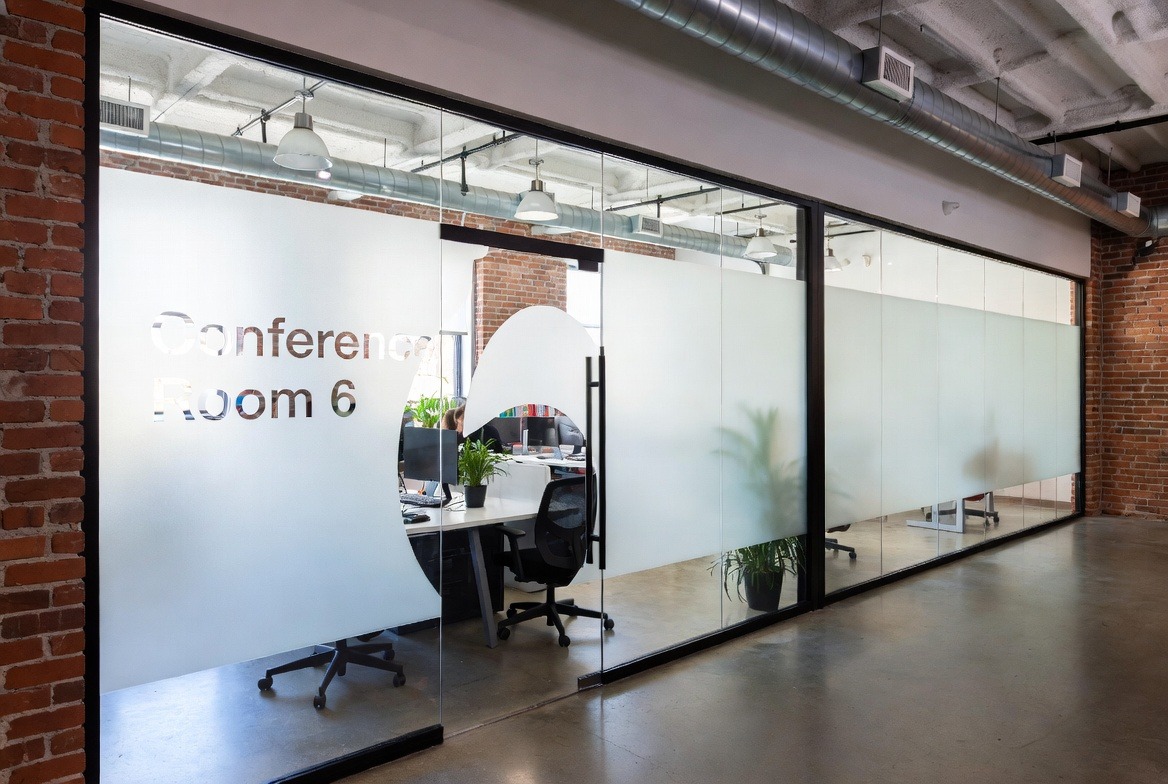
Window films help Toronto and GTA businesses turn plain storefront glass into branding, privacy, and useful customer info. For shops, clinics, salons, cafés, studios, and offices, window films can hold custom vinyl lettering, logo graphics, frosted sections, and door text that people can read fast. They help a buisness look clear from the street without changing the whole storefront or replacing the glass.
That matters because people make quick choices. On Queen Street West, Bloor, Yonge, The Danforth, Eglinton, and in plazas across North York, Scarborough, Markham, Vaughan, Mississauga, and Brampton, most people do not stop and study a window. They glance. They look for the name, the hours, and a sign that the place feels open and proffesional. If the glass is blank, messy, or hard to read, that first moment can get wasted.
Window films fix a lot of small storefront problems in one move. They can show your brand, hide a cluttered lower counter, soften direct views into treatment areas, and make the whole unit feel more finished. They can also support wayfinding. A first-time customer can see the name faster. A delivery driver can spot the entrance. Someone walking by can tell what kind of business is inside without guessing.
For Toronto businesses, this is not only about decoration. It is also about function. Some storefronts get harsh west sun in summer. Some deal with winter slush, salt marks, and dull-looking glass for months. Some need privacy at eye level but still want daylight. Some lease older units and want a better front without spending on a full rebuild. Window films fit those real, day-to-day needs very well.
What storefront window films actually are
Storefront window films are adhesive materials applied to glass. They can be cut into letters, shapes, and logos, or printed with full-colour graphics. They can also be frosted, dusted, etched-look, patterned, or partly opaque. In simple terms, they help the glass do more than just sit there.
The most common storefront film uses include business names, logos, store hours, website addresses, social handles, privacy bands, directional text, and branded design strips. Some businesses only need a clean logo on the main pane and hours on the door. Others need a mix of branding and privacy, such as a frosted mid-band with the logo layered over it.
A lot of owners think window films are just stickers. That is a bit too simple. Good storefront film is planned around the glass size, sight lines, light, foot traffic, and how the business works inside. A café may want open visibility and a bold logo. A medical clinic may want daylight plus partial privacy. A salon may want the glass to feel stylish but still let people see some activity inside. The film choice changes with the use.
This is why the work overlaps with glass graphics and film installation. The installer still has to measure each pane, prep the glass, line up the layout, work around handles and frames, and stop bubbles or lifting edges. Storefront glass is very unforgiving. If letters tilt a little, if a frosted band sits too high, or if the spacing feels off, people notice right away.
Window films also help create a middle ground between two bad options. One bad option is leaving the glass bare and hoping people notice you. The other is covering the whole front with random posters, taped notices, and temporary signs. Film makes the front look more settled. It keeps the glass bright, but gives it a job.
In Toronto, this matters a lot for leased units. Many business owners want the place to feel custom, but they do not want to commit to a very expensive permanent front if the brand changes or the lease shifts. Window films are easier to update than many hard sign systems, which is one reason they keep showing up in local retail strips and multi-tenant plazas.
How window films help storefront branding, privacy, and first impressions
The first benefit is branding. A clean logo or business name on glass helps people identify the store fast. That sounds obvious, but many units still miss this. Some have tiny logos that only make sense if you stand right in front of the door. Some have too much text and no clear focal point. Some rely on posters in the window that were never meant to be long-term signage. Window films help organize the message.
The second benefit is privacy. This is a big deal for clinics, treatment spaces, salons, offices, studios, and service businesses. Most of them do not want total blackout. They want selected privacy. Maybe the lower half of the glass should hide a waiting area. Maybe the front desk should not be visible from the sidewalk. Maybe treatment rooms need screening, but the space should still feel bright. Frosted or patterned films do that very well.
The third benefit is first impression. People read a storefront before they step in. They look at the glass and make a quick call on whether the place feels active, clean, and trustworthy. Straight lettering, readable hours, and balanced window graphics help the business feel settled. Peeling decals, crooked text, and cluttered glass do the oposite.
Here is one local example. A small bakery near Riverdale had nice products and good reviews, but the front windows were almost empty. Drivers and walkers saw display shelves, but the bakery name did not stand out. The owner added a simple logo film, white door lettering, and a small frosted strip near the prep side of the unit. The place still looked open, but people could read it faster. Staff said new customers stopped asking if they had the right shop.
Another example came from a physiotherapy clinic in Mississauga. The clinic had floor-to-ceiling front glass and lots of daylight, but the front waiting area felt too exposed. The owner did not want dark film. The fix was a soft frosted band with the logo and room markers, placed at eye level. Patients got more privacy, the clinic stayed bright, and the front looked calmer. It was a small install, but it changed how the space felt.
There can also be a protective side benefit. The Government of Canada’s guidance explains that thin flexible plastic filters are used on windows and can reduce UV exposure. For storefronts with printed menus, packaging, fabrics, or display items near the glass, that can help reduce fading over time. You can review that guidance here: Canadian Conservation Institute UV filter guidance.
Why storefront window films make sense in Toronto and the GTA
Toronto storefronts deal with a lot. Some are on heavy foot-traffic streets. Some are in car-based plazas where people read the unit from farther away. Some face hard afternoon sun. Some sit under deep canopies and need clearer lettering to stand out. Some get slush and salt spray in winter, which makes a tired-looking front feel even more tired. Window films work well here because they are flexible and practical.
They also fit the pace of local business. In the GTA, businesses refresh their branding, add services, adjust hours, and switch layouts pretty often. A tenant in Leslieville may want a softer branded front now and a stronger logo later. A clinic in North York may add a practitioner and need updated door lettering. A shop in Vaughan may want seasonal graphics without making the whole window feel temporary. Film handles those changes better than many rigid sign systems.
Another reason is cost control. Replacing glass, rebuilding a full sign package, or commissioning custom etched panels can be a bigger step than many owners want. Window films often offer a simpler path. They make the storefront feel more custom without forcing a full exterior overhaul. For leased units, that can be a very smart middle ground.
Local rules also matter. Before putting larger graphics on storefront glass, it helps to review the City’s rules for window signs. Toronto says window signs are permitted in many sign districts and may not need a sign permit if they stay within listed conditions, including first-party copy and size limits. Here is the official page: City of Toronto general sign inquiries.
Toronto weather is another factor. In July and August, west-facing storefronts can feel bright and glary by late afternoon. In January and February, the street can look grey, wet, and rough. Clean window films help the unit stay readable in both situations. In summer, branded glass can still look neat when the sun hits it hard. In winter, a polished front with clear lettering still gives the place some life when the sidewalk looks dull and slushy.
There is a local search angle too. People often see the storefront online before they see it in person. They check maps, photos, and business listings, then they visit. When the real storefront matches the online brand, trust gets built faster. That is not just a design issue. It helps the whole customer journey feel more consistent.
How to choose the right window films and the right layout
The best starting point is very simple: ask what the glass needs to do. Does it need to show the name from farther away? Does it need partial privacy? Does it need to hide clutter near the floor? Does it need to make the business feel more branded without blocking the view inside? The answer guides the layout.
A simple planning list helps a lot:
- Branding: What should people read first?
- Privacy: Full, partial, or only at eye level?
- Light: Do you want to keep the front bright?
- Distance: Will people read the glass from the sidewalk or parking lot?
- Updates: Are your hours, offers, or services likely to change?
Many businesses do best with a balanced setup instead of a giant full-window graphic. A readable logo. Clean hours on the entry door. A frosted or patterned band where privacy helps. Enough open glass to keep the place welcoming. This kind of layout often ages better and stays easier to maintain.
Placement matters too. Door lettering should not fight with handles or lock hardware. A frosted band should line up with seated or standing sight lines, depending on what the business needs. A logo should be big enough to read from the actual approach path, not just from a design mockup on a screen. Small choices like these change the result alot.
It also helps to think about cleaning and wear. High-touch doors need durable material and clean application. Side panes with less contact can handle more detailed graphics. A good installer should explain what to clean with, what to avoid, and how to keep edges looking neat. That part sounds boring, but it matters after the first few months.
For Toronto and GTA businesses, window films are one of the easiest ways to improve storefront glass without a major renovation. They help with branding, privacy, readability, and the overall feel of the front. If your glass still feels empty, cluttered, or too exposed, a film-based layout may be the fix that makes the whole unit work better every day.
Leave a Reply