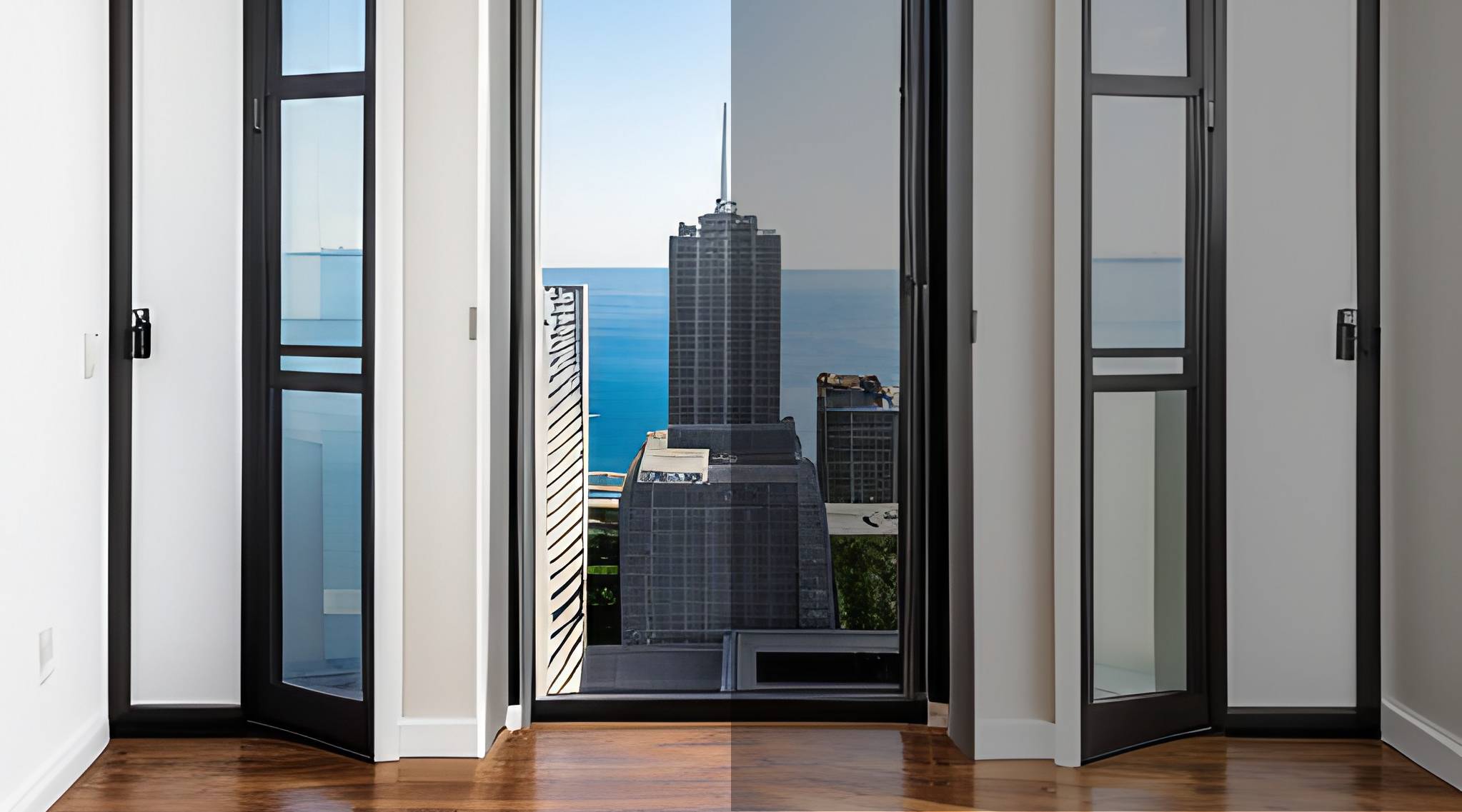
Window films help Toronto homes and businesses add privacy, style, and function without replacing the glass. People use window films in condos, houses, offices, clinics, shops, and restaurants across the GTA. But before decorative film goes on any window, door, or glass wall, there is one thing that matters a lot: the rules for that space.
This is where many jobs get messy. A homeowner may think decorative film is just a small design upgrade. A business owner may think frosted glass graphics are only about looks. That is not always true. The glass may belong to the condo corporation. The landlord may need to approve the work. The front window may count as part of a sign plan. So the real question is not only “Which film looks best?” The real question is “Who knows how to install window films the right way for this building?”
That is why this comparison matters. In Toronto and the GTA, window films for homes and businesses often look similar at first. Frosted film is frosted film. Patterned film is patterned film. But the approval path, glass type, and day-to-day use of the room can be very diffirent. A condo bathroom window in North York is not the same as a branded office entry near Union Station. A clinic room in Markham is not the same as a front door sidelite in Etobicoke. The right installer will know that before the first cut is made.
Tintly Window Films has worked across Toronto, Scarborough, Vaughan, Mississauga, Brampton, Richmond Hill, and other GTA areas where glass rules change from one building to the next. That local experience helps because decorative window films are not only about style. They are also about privacy, layout, approvals, and making the space work better for real people every day.
Tintly Window Films
Tintly Window Films tends to approach decorative film work like a real site project, even when the job is small. That sounds simple, but it matters. A lot of bad installs do not fail because the film is poor. They fail because the installer skipped the early questions. Who owns the glass? Is the unit leased? Is the window part of a condo rule set? Does the design include text, a logo, or business hours? Will the film need to come off at the end of a lease? These questions are not fancy, but they stop small jobs from turning into bigger problems.
This is one reason some clients pick Tintly instead of a general film shop. Many installers begin with the sample book. They ask if you want frosted film, patterned film, blackout film, or privacy film. Tintly usually starts one step earlier. They ask where the glass is, how the room is used, and whether a manager, landlord, or board may need to say yes before the work starts. That can feel slower at first, but it often saves people from redoing the whole job later.
Decorative window films also need careful layout. If a frost band sits too low, it can look odd from the hallway. If a pattern is too busy, the room can feel smaller. If the cut line drifts near the frame, even good film can look cheap. This shows up a lot in offices, condo entries, clinics, and boardrooms where the glass is close to eye level. People notice details, even if they do not say it out loud.
Tintly also tends to explain the real job of the film in plain words. Some clients want privacy in a bathroom. Some want a cleaner look for a front office. Some want a more proffesional feel in a clinic or salon. Some want branding on a front door without closing off all the light. Decorative window films can do a lot, but they are not the same as solar, security, or heat-control film. A good installer explains what each film does well and where a diffirent product may work better.
That kind of clear advice matters in Toronto weather too. In winter, older glass near the lake can feel cold and some condo windows get condensation near the edges. In summer, west-facing windows in places like CityPlace or Liberty Village can create glare late in the day. Decorative film can help with privacy and appearance, but it is not a cure for every glass problem. Clients usually respect that honesty more than a big sales pitch.
Other Installers
To be fair, other installers are not always poor. Some do nice work. Some are quick. Some offer lower prices that fit a tight budget. For a very simple interior panel inside a detached home, lots of installers can get the job done well enough. The trouble starts when they treat residential and commercial glass like they are the same thing.
A cheap quote often leaves out the building questions. The installer measures the glass, picks the film, and books the date. That can work for a small home project with no approval issues. It can go wrong fast in a condo or leased business unit. If the glass is controlled by the condo or landlord, the client may need permission before any film goes on. If the design includes branding on front glass, there may be sign rules too. Once that gets missed, the low quote can turn into removal costs, new labour, and a very grumpy client.
Another issue is room use. Decorative film should fit the way the room works, not just the way the sample looks on paper. A boardroom may need privacy at seated height but still allow daylight. A clinic room may need patient privacy without making the room feel boxed in. A restaurant may want softer front glazing but still need people outside to see in. Good film work is part design and part function. Many budget installers focus only on the first part.
Local knowledge also matters more than people think. A retail unit on Queen Street West has diffirent needs than a family dental office in Markham. A condo lobby in downtown Toronto has diffirent expectations than a townhouse entry in Vaughan. Installers who know the GTA tend to ask better questions. They know which jobs are simple, which jobs need a quick approval check, and which jobs need a mock-up before anyone commits.
Residential Window Films
Residential decorative window films are often more direct, but not always. In a freehold house, the owner usually has more control over the decision. Common places for decorative films include bathroom windows, front doors, sidelites, basement windows, laundry room windows, and home office glass. The main goals are often privacy, a better look, and softer light. In many of these cases, the project can move ahead without much delay.
Still, even house jobs need some thought. A front door film that is too dense can make the entry look flat. A bathroom film that covers too little glass may not solve the privacy problem at night. Decorative window films should match the room, the light, and the distance from nearby neighbours. In older Toronto streets with homes close together, small changes in film coverage can make a big diffirence.
One example came from a semi-detached home in East York. The owner wanted privacy for a front hall window that faced the sidewalk. They first thought about blinds, but the space was narrow and the window looked awkward with fabric on it. Decorative frosted film worked better. It kept the daylight, cleaned up the look of the hall, and gave privacy without making the space feel shut in. It was a small job, but the correct film density mattered a lot.
Condos are where residential projects become less simple. A condo owner may think the inside surface of the glass is theirs to change. Sometimes it is. Sometimes it is not. The Condominium Authority of Ontario explains that condo corporations are generally responsible for common elements and standard unit elements, while owners are generally responsible for decorative and non-standard unit elements. So the condo documents matter. The answer can change from one building to the next.
That means a decorative film job in a condo often needs one more phone call before booking. A unit owner near Yonge and Eglinton may want frosted film on a bathroom pane because another tower now faces the unit. The privacy need is real. The film choice may be easy. But if the outside look of the window changes, or if the glass falls under building rules, the owner may need approval first. That is not hard to deal with if it is caught early. It is much harder after install.
Commercial Window Films
Commercial decorative window films usually come with more layers and more people involved. The person asking for the quote may not be the one who signs off on the work. A tenant may need landlord approval. A property manager may want product details. A franchise may need head office approval. A designer may want samples or a mock-up. That is normal for offices, retail units, schools, salons, clinics, and restaurants across Toronto and the GTA.
The biggest commercial issue is often this: is the film only decorative, or is it also working like a sign? A frosted stripe across a boardroom wall is one kind of project. A logo on the front door can be another. The City of Toronto’s sign permits information page explains how the Sign By-law applies to business signs, including signs placed on windows. That matters when decorative graphics turn into business identification or advertising.
Here is a common GTA-style example. A wellness clinic in Liberty Village wants frosted film on treatment room glass and a logo on the entry door. The treatment room film is mostly about privacy and comfort. The front entry graphic is partly branding. The materials may look similar, but the approval steps are not the same. One part is an interior privacy upgrade. The other can touch landlord rules, sign review, and store visibility. If the installer treats both pieces like one basic film job, the project can get delayed right before opening.
Commercial spaces also change fast. A business may expand, rebrand, or move out. So removal matters. The installer should explain how the film may come off later, what shape the glass needs to stay in, and what the lease may require at turnover. That advice is not flashy, but it is useful. It shows the installer is thinking about the whole life of the job, not only install day.
Room function matters too. A downtown boardroom may need privacy bands that still let in lots of light. A shop in Mississauga may want branding at the front while keeping sightlines open from the parking lot. A clinic in Scarborough may want a warm pattern instead of plain frost so the space feels less cold. Decorative window films work best when the installer listens to how the room is used in real life. Thats where better planning beats faster quoting.
Which Installer Makes More Sense?
If the project is a small interior glass panel in a freehold home, many installers may do a decent job. If the project is in a condo, a leased office, a clinic, a storefront, or a shared commercial building, the safer choice is often the installer who asks more questions before the final quote. That is where Tintly Window Films usually has the edge.
The best window films projects are not always the boldest or most expensive ones. They are the ones that fit the glass, fit the room, and fit the rules around the building. They also solve the real problem the client has. Maybe that problem is privacy from a nearby building. Maybe it is a front office that feels too exposed. Maybe it is a clinic room that needs more comfort for patients. Maybe it is a storefront that needs a cleaner look without losing all the light.
Before hiring any installer, ask a short list of questions:
- Who owns or controls this glass?
- Is this a house, condo, or leased commercial unit?
- Does the design include a logo, hours, or other wording?
- Is the goal privacy, style, branding, or space division?
- Will the film need removal when the lease ends or the unit is sold?
For Toronto, North York, Etobicoke, Scarborough, Mississauga, Brampton, Markham, Richmond Hill, and Vaughan, that short list can save time and money. Decorative window films work best when the install is neat, the pattern fits the room, and the approval path is checked early. It is simple advice, but it stops a lot of avoidable problems.
Leave a Reply