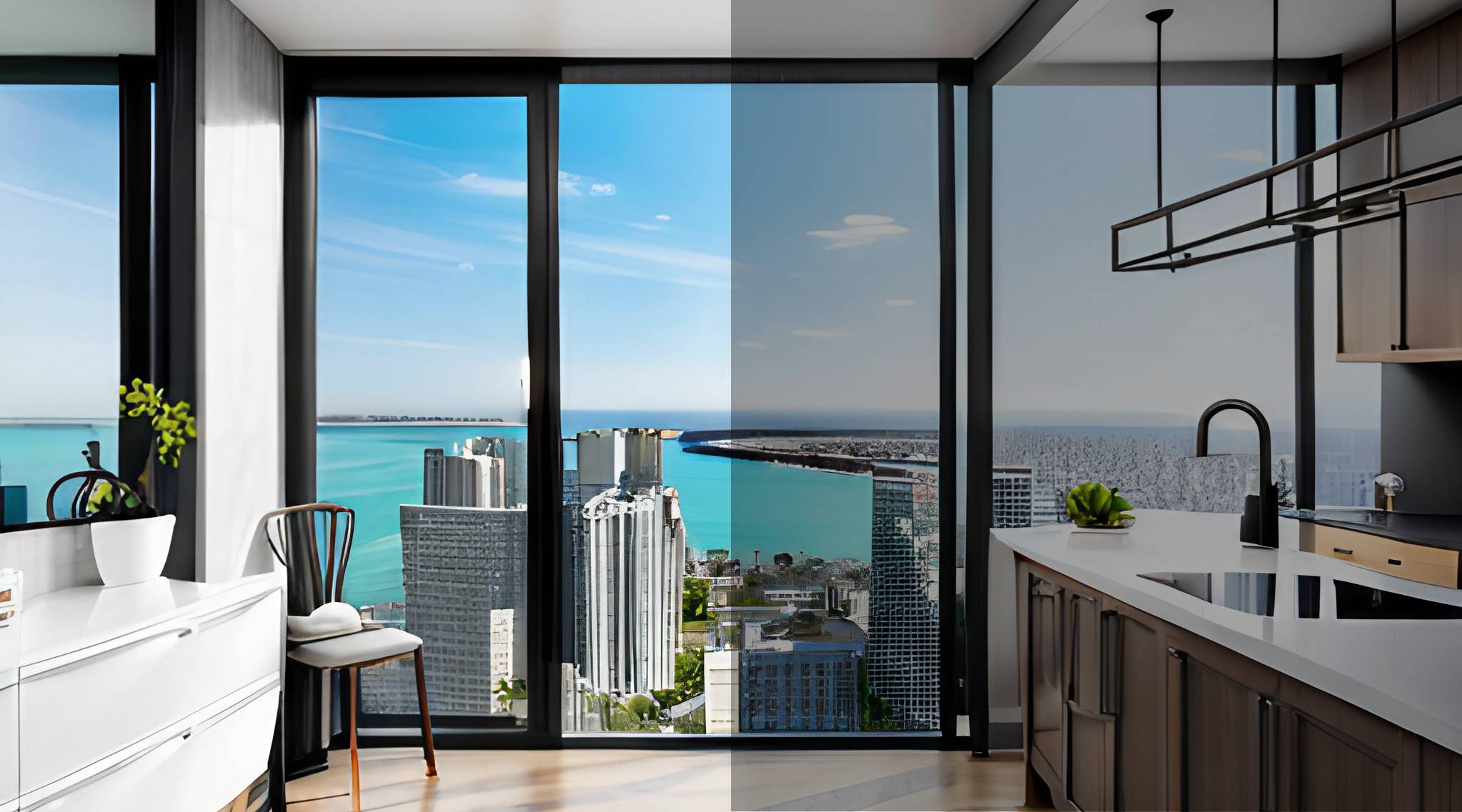
If you are searching for window films in Toronto and the GTA, you are probably trying to solve one annoying problem that keeps coming back. Maybe your condo gets blasted by late-day sun. Maybe glare makes your office screens hard to use. Maybe a front door or boardroom has no privacy at all. Maybe a storefront feels too open after dark. These are the real reasons people start looking at window films. They are not just for looks. They are used to cut heat, reduce glare, add privacy, and help glass perform better in homes and businesses across Toronto, North York, Scarborough, Etobicoke, Mississauga, Vaughan, Markham, Richmond Hill, and Brampton.
This guide keeps it simple. You do not need to know every film type before you start. You do not need to learn glass jargon. You just need to know what window films can do, when they make sense, and how to choose the right local installer. If you want a broad starting point first, this page covers more window films and how they fit diffrent spaces.
What you will learn in this guide
- What window films are and how they work
- Which types of window films fit homes, offices, clinics, and shops
- How window films help with heat, glare, fading, privacy, and safety
- When window films make more sense than new windows
- What affects cost in Toronto and the GTA
- How to choose a local window tinting service without buying the wrong thing
What are window films, and why do people in Toronto and the GTA use them?
Window films are thin layers applied to glass to change how the glass performs. Some films cut solar heat. Some reduce glare. Some add privacy. Some help hold shattered glass together. Some are decorative and change the look of plain glass. A lot of beginners think all window films make a room dark. Thats one of the biggest myths. Some films are darker, some are frosted, and some are almost clear.
That matters in Toronto and the GTA because glass causes the same problems again and again. Downtown condo towers often have large walls of glass. Office spaces in North York, Markham, and Mississauga deal with bright sun and screen glare. Retail shops with street-facing windows may want more privacy or more protection. Homes in Vaughan, Richmond Hill, and Etobicoke often have one room that gets way hotter than the rest of the house.
The City of Toronto has put more focus on building performance in recent years, and that matters because glass can affect comfort and energy use. The U.S. Department of Energy also points out that some window films can reduce solar heat gain on certain windows. That is one reason window films are often looked at before full window replacement.
Which window films solve the most common problems?
Not every film fixes the same issue. This is where many people get mixed up. They ask for tint when what they really need is solar film, privacy film, safety film, or decorative film.
Solar window films for heat and glare
Solar window films are usually chosen when the biggest problem is too much sun. They help cut glare and reduce heat coming through the glass. This type is popular in condos, office towers, restaurants, and homes with bright living rooms or sunrooms.
A west-facing condo near Liberty Village is a good example. The owner may love the view, but by mid-afternoon the room gets too bright, the couch gets hot, and the air conditioner starts working harder. Solar window films can make that room easier to use without changing the whole window system.
Privacy window films for homes and offices
Privacy window films are used when people can see in too easily. Frosted films are common on bathroom windows, front doors, office meeting rooms, clinics, and interior glass partitions. Reflective films can also add daytime privacy, but the lighting matters. At night, if the inside is brighter than the outside, the privacy effect can change. A good installer should explain that in simple words, not in salesy talk.
A small clinic in Markham is a good example. The owner may want treatment rooms to feel open and bright, but still need patient privacy. Frosted window films can do that without replacing the glass. The room still gets light, but direct views are blocked. Its a simple fix, and it usually makes the space feel more finished too.
Safety and security window films for broken glass concerns
Safety and security window films are used when broken glass is the main worry. These films are common in storefronts, schools, offices, and homes with large patio doors or sidelights. Their main job is to help hold shattered glass together after impact. That can help reduce flying shards and slow down forced entry. It does not make regular glass bulletproof, and any installer who says it does is not being honest.
Decorative window films for style and light privacy
Decorative window films are picked for both looks and function. They can add patterns, gradients, frosting, or custom designs to plain glass. These are common in salons, spas, condo common areas, offices, and modern homes that want cleaner-looking glass without losing natural light.
Are window films better than replacing the windows?
Sometimes yes. Sometimes no. The answer depends on what problem you are actually trying to fix.
If the glass and frames are still in decent shape, window films often make more sense than window replacement when the real issue is heat, glare, privacy, fading, or basic glass safety. A lot of Toronto and GTA property owners have windows that are still usable. The problem is not that the windows are falling apart. The problem is that the rooms are hard to use at certain times of the day.
Window films often make sense when:
- one room gets too hot every sunny afternoon
- glare makes work, TV, or screen use annoying
- flooring, furniture, or merchandise gets too much sun
- a bathroom, boardroom, clinic, or front entry needs privacy
- a storefront wants more glass safety without a full renovation
- you want a faster job with less mess
Replacement may still be the better choice when the window frames are damaged, the seals have failed, or the glass system itself has serious problems. But many owners jump into replacement quotes before asking whether window films could solve the issue first. That can get expensive fast.
For local businesses, speed matters too. A busy shop in Queen West or a clinic in North York does not always want a large construction project. Window films can often be installed much faster, which means less disruption for staff, customers, and tenants.
How much do window films cost in Toronto and the GTA?
Cost depends on more than square footage. The price of window films usually changes based on the film type, the size of the glass, how easy it is to reach the windows, and how much prep work is needed before installation.
These are the main things that move the price:
- Film type
Solar, privacy, decorative, and security window films do not cost the same. - Glass size and layout
One large pane may be easier than several small panes with lots of cutting. - Access
A ground-floor storefront is very diffrent from a high-rise condo, a stairwell window, or a tight office fit-out. - Prep work
Old film removal, leftover adhesive, dirty edges, and problem glass can add labour. - Performance goals
Some owners want a lighter look. Others want stronger heat rejection, more privacy, or more safety.
The lowest quote is not always the best quote. If someone throws out a price without asking about the glass, the room, or the problem you want to fix, slow down. A better quote explains what film is being used, what the room should look like after the install, what the warranty covers, and how long the curing process may take.
How do you choose the right window tinting service?
The film matters, but the installer matters just as much. Good window films can still look bad if the install is sloppy. Dust under the film, uneven cuts, peeling corners, or the wrong product choice can ruin the result.
Here are a few simple ways to filter local installers.
Ask what problem they are trying to solve
A good window tinting service should ask questions first. Is the problem heat? glare? privacy? fading? safety? style? If they push one film for every job, that is not a great sign.
Ask what the film will look like on your actual glass
Samples are helpful, but real glass behaves differently in real spaces. Ask what the film will look like on a bright day, on a cloudy day, and at night. This matters a lot for privacy films.
Ask about GTA project experience
A crew that works across Toronto, Vaughan, Markham, Mississauga, Brampton, and Richmond Hill has likely seen condo rules, office access issues, street-level retail concerns, and older residential windows before. That local experience can save time and avoid silly mistakes.
Ask about aftercare
You should know what normal curing looks like, how long it may take, and when you can clean the glass. A little haziness or moisture right after installation can be normal. Panic on day one is usualy not needed.
What should you expect before and after installation?
A typical window films project starts with a site review or a clear set of measurements and photos. After that, the installer confirms the product, checks the glass, and sets an installation date. On install day, the glass is cleaned carefully, the film is cut to fit, and the film is applied and pressed down so it bonds smoothly.
After the install, the windows may look a bit hazy while the film cures. Small water pockets can show up at first too. That does not always mean something went wrong. A decent installer should tell you what is normal before the job is even done.
For homes, the biggest gain is often comfort. For offices, it is often glare control and privacy. For storefronts, it may be a mix of solar control, security, branding, and street-level privacy. Same product family, very different uses.
Why do local examples matter when choosing window films?
Local examples help because Toronto and the GTA are not one-size-fits-all. A waterfront condo has different sun exposure than a detached home in Vaughan. A retail shop in downtown Toronto has different privacy and safety needs than a medical office in Markham. A school or daycare in Scarborough may care more about glare and broken glass. A restaurant in Mississauga may care more about daytime heat and guest comfort near the front windows.
That is why good local installers do not start with the same answer every time. They start with the building, the glass, the direction of the sun, and how the space is used.
Final thoughts on window films in Toronto and the GTA
For most beginners, window films do not need to feel confusing. Start with the problem you want to fix. Too hot. Too bright. Too exposed. Too much fading. Worried about broken glass. Then match that problem to the right type of film and to a local installer who can explain things clearly.
The best window films job is not always the darkest film or the lowest quote. It is the one that fits your glass, your building, your budget, and the way you actually use the room.
If you are comparing window films in Toronto and the GTA, ask for a site review, ask plain questions, and make the installer explain the difference between solar, privacy, decorative, and safety film without fluff. That will help you avoid buying the wrong thing the first time.
Leave a Reply